Before Q-Day
What to Expect While We're Expecting
How to Prepare Your Bitcoin and Crypto for the Quantum Change: What’s Settled, What’s Coming, and What to Do in the Meantime
Start reading
Read the introduction
This is a book about a change that has already been scheduled.
Somewhere in the next decade, the mathematics that proves you own your coins is going to be replaced. Not patched — replaced. The signatures your wallet makes today belong to a family of problems that a large enough quantum computer can solve backwards, working from a public key to the private key it was supposed to protect. No such computer exists yet. That sentence is true as this book is written, in November 2026, and this book will keep returning to it, because everything honest about this subject hangs on knowing exactly which parts are settled and which parts are still guesses.
Here is what is settled.
The replacement signatures exist. In August 2024, after an eight-year public competition, the United States National Institute of Standards and Technology published the finished standards: ML-DSA and SLH-DSA for signatures, built to survive the machine that breaks the old ones. The deadlines exist too. The same institute has set the dates after which the old algorithms are deprecated (2030) and then disallowed (2035) in the systems it governs, and governments and standards bodies on several continents have published timelines in the same window. And the cost of the change is known, because it can be measured in bytes: a signature that takes about 64 bytes today will take roughly 2,400 to 4,600 bytes in its standard replacement, and nearly 50,000 in the most conservative one. The future, in this case, is not mysterious. It is merely large.
Here is what is not settled. Nobody knows when a quantum computer capable of breaking today's signatures will be built. The honest estimates from the people building them range across years to decades, and this book will show you those estimates with their sources rather than pick one and pretend. Nobody has chosen the post-quantum signature scheme for Bitcoin; there are drafts, and drafts are all they are. And nobody — no foundation, no wallet maker, no standards body — has yet written the instructions you will one day follow to move your coins, because the address type you will move them to does not exist yet.
A book that hid those gaps would be selling you something. This one takes the other road, and it is worth saying plainly what that road gives you:
For everything you need to do now, this book contains complete solutions. The practices that keep a holder safe in the meantime — how addresses expose their keys and when, how to keep a seed the way it deserves to be kept, how to sign without your keys ever touching the internet, how to change devices without changing wallets, and how to change wallets when a device is in doubt — are finished, documented, and testable today. Nothing in that half of the book depends on a roadmap.
For the change itself, this book contains the complete map as it stands: the standards, the deadlines, the exposure — how much coin sits where a future machine could reach it, counted several ways by several counters — and the state of each major chain, including one that has already made the crossing and can be visited today. Where the map runs out, it says so, in a chapter of unknowns that is part of the book and not an apology appended to it.
You will not find quantum physics here beyond the one idea the whole thing turns on: a signature is a proof made from a secret, and a new kind of computer threatens the hiding of that secret. This is not a book about the machine. It is a book about a transition — written for the people who will have to make it, holding what they hold, with the tools that exist today.
It is dated, deliberately. November 2026. When the facts move, the facts that were true on that date will still be the record of what a careful holder knew, and when.
— The Author
---
Free editions
Free. No account, no email, nothing to sign up for.
Audio edition
The whole book, read aloud. 6 parts · 58 minutes total.
Press play on any part — the book plays straight through to the end.
Watch
The book on film, on DJByt — the Douglas J. Brownfield Books YouTube channel. The trailer sets out the scheduled change in four minutes; the three Shorts take Exposure, the Size Jump, and Signing by QR one at a time. The complete audiobook film follows when the channel's long-video tier opens.
Watch the trailer — Your Bitcoin's Signature Has an Expiry Date: Before Q-Day Trailer
About the book
The signatures that prove you own your coins are going to be replaced. That is not a prediction — it is a schedule.
In August 2024, after an eight-year public competition, NIST published the finished post-quantum signature standards, built to survive the quantum computer that breaks today's. The same institute has set the dates after which the old algorithms are deprecated (2030) and then disallowed (2035), and governments on several continents have published timelines in the same window. What nobody has published is the day the machine itself arrives — and nobody has yet written the instructions for moving your coins, because the address type you will move them to does not exist yet.
Before Q-Day is the holder's guide to that in-between time. It separates what is settled from what is still a guess, and it does not blur the line: the finished standards and the deadlines; the size jump, measured in bytes; how much Bitcoin is exposed, counted six different ways by six different counters, and why they disagree; where each chain actually stands, from Bitcoin's drafts to Algorand's finished, running answer; and the counter-case, argued at full strength by the people who think there is nothing to worry about for decades.
And for the meantime — the years between now and the move — it gives complete, testable practice: how addresses expose their keys and when, how to keep a seed offline, how to sign by QR with your keys never touching the internet, and how to change devices, or change wallets, without changing who holds the coins. The migration, when it comes, will be a move — not a rebuild. This book is how you are standing when it arrives.
Facts are stated as of 2026, with sources. Where the record is unfinished, the book says so, in a chapter of its own.
Before Q-Day grew out of the author’s own preparation. Faced with a scheduled change to the mathematics his holdings depend on, he went looking for the book that explained it plainly — what is settled, what is not, and what to do in the meantime — and then wrote the one he had needed.
Inside the book
- Part One — The Change That Is ComingWhat a signature is · The state of the machine · The standards are finished · The size jump · The deadlines · Exposure — how much, and whose
- Part Two — Where Each Chain StandsThe ones who already crossed · Bitcoin — drafts, not decisions · A short history of Bitcoin · Ethereum — the account route · Solana and the rest · Case study — Algorand · A short history of Algorand
- Part Three — The MeantimeAddress hygiene · The offline device · Signing by QR · Restore and sweep · How we do it
- Part Four — The Move, When It ComesWhat the migration will actually be · Lightning and the layers above · The unknowns, stated · The counter-case, fairly
- Appendix — Go DeeperFree courses and texts · The primary documents · Scholar and research communities · Hands-on tools · The standing trackers — for enthusiasts and scholars
The art
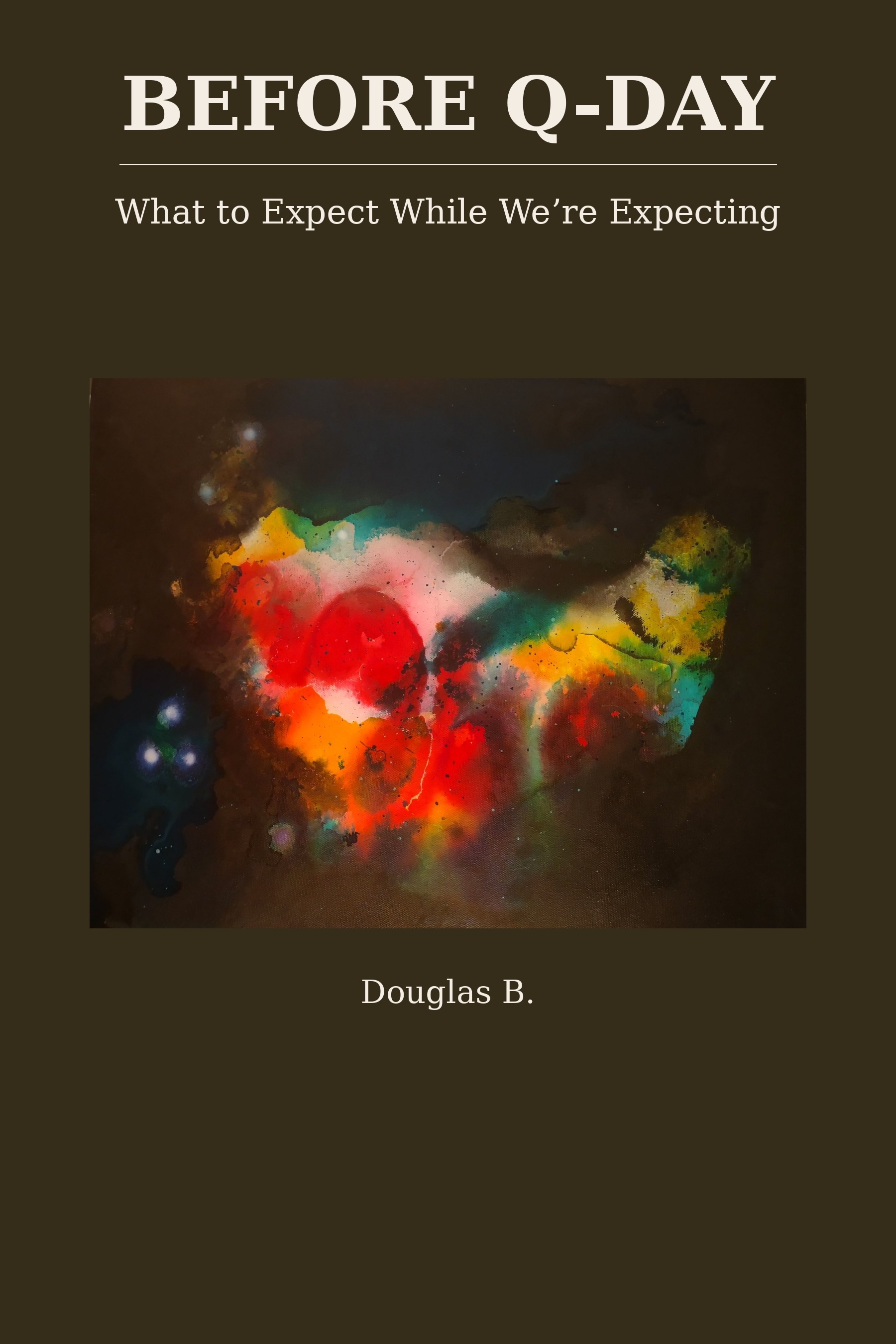
The art in this book is one painting, four times — an abstract work in ink on canvas by the artist, a nebula laid down in stages. Each stage opens one part of the book, so the painting finishes as the book does. Many stages, one work.
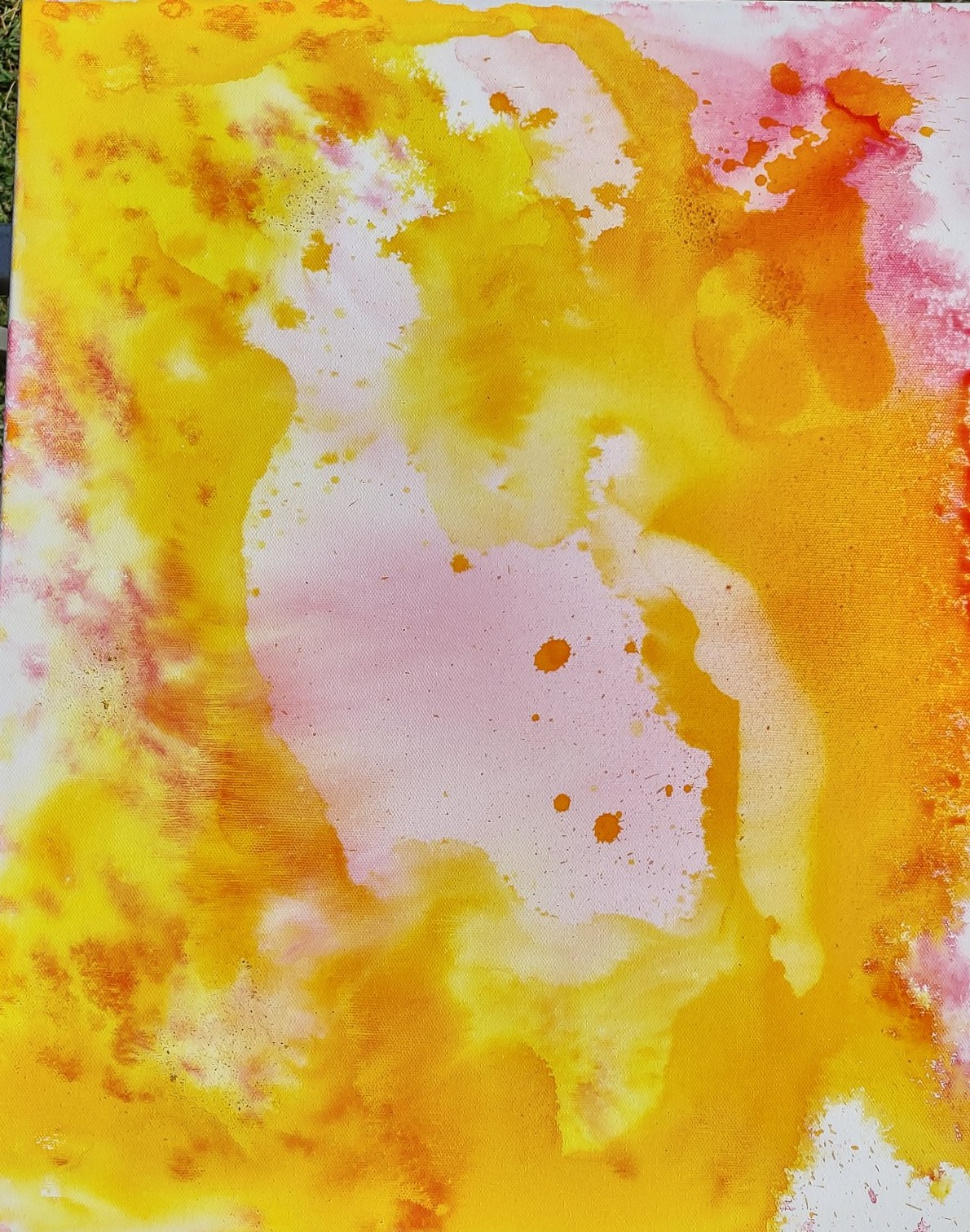
Stage 0 — the first washes. Posted as “Light 01”.
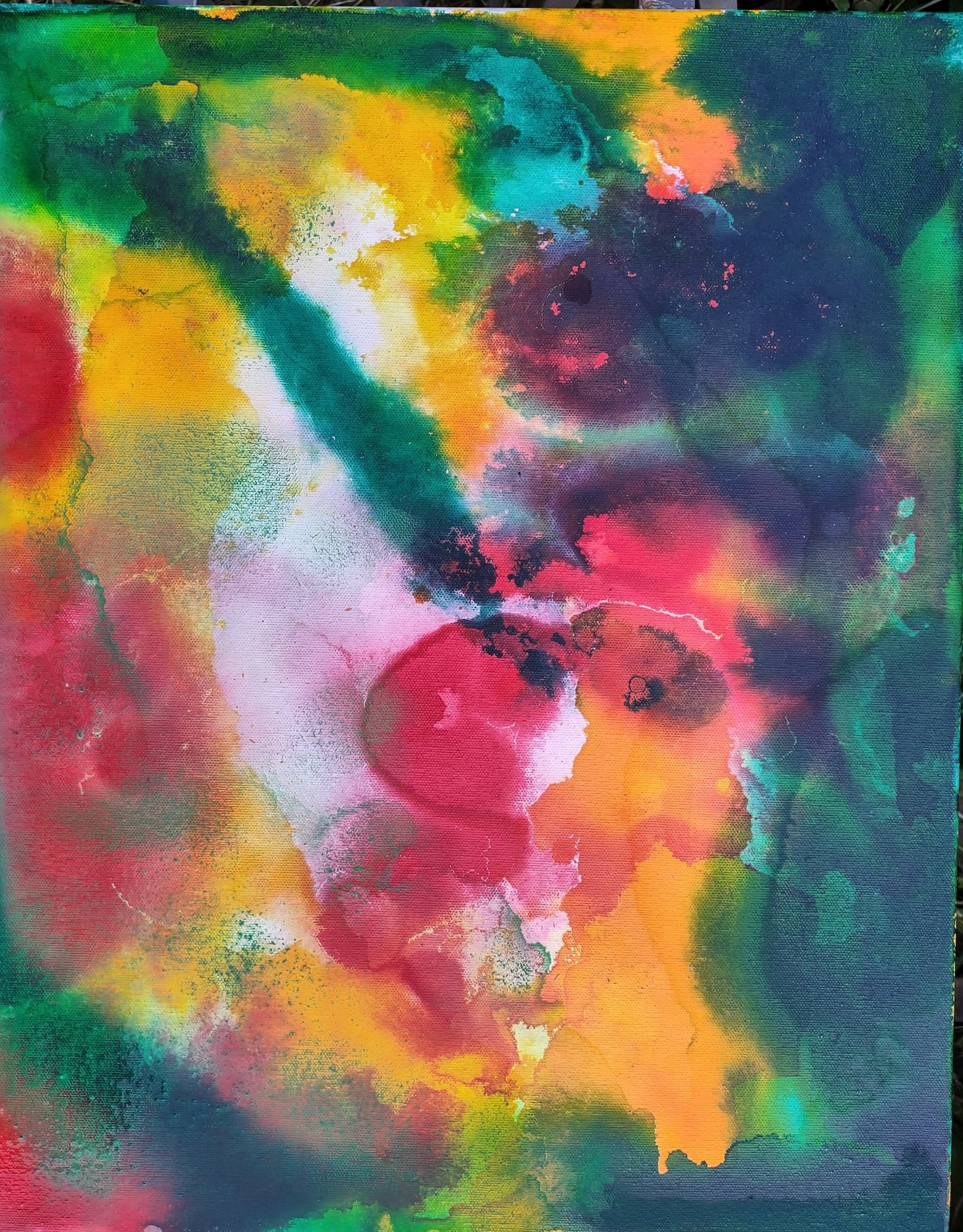
Stage 1 — the full colour nebula. Posted as “Gr33n”.
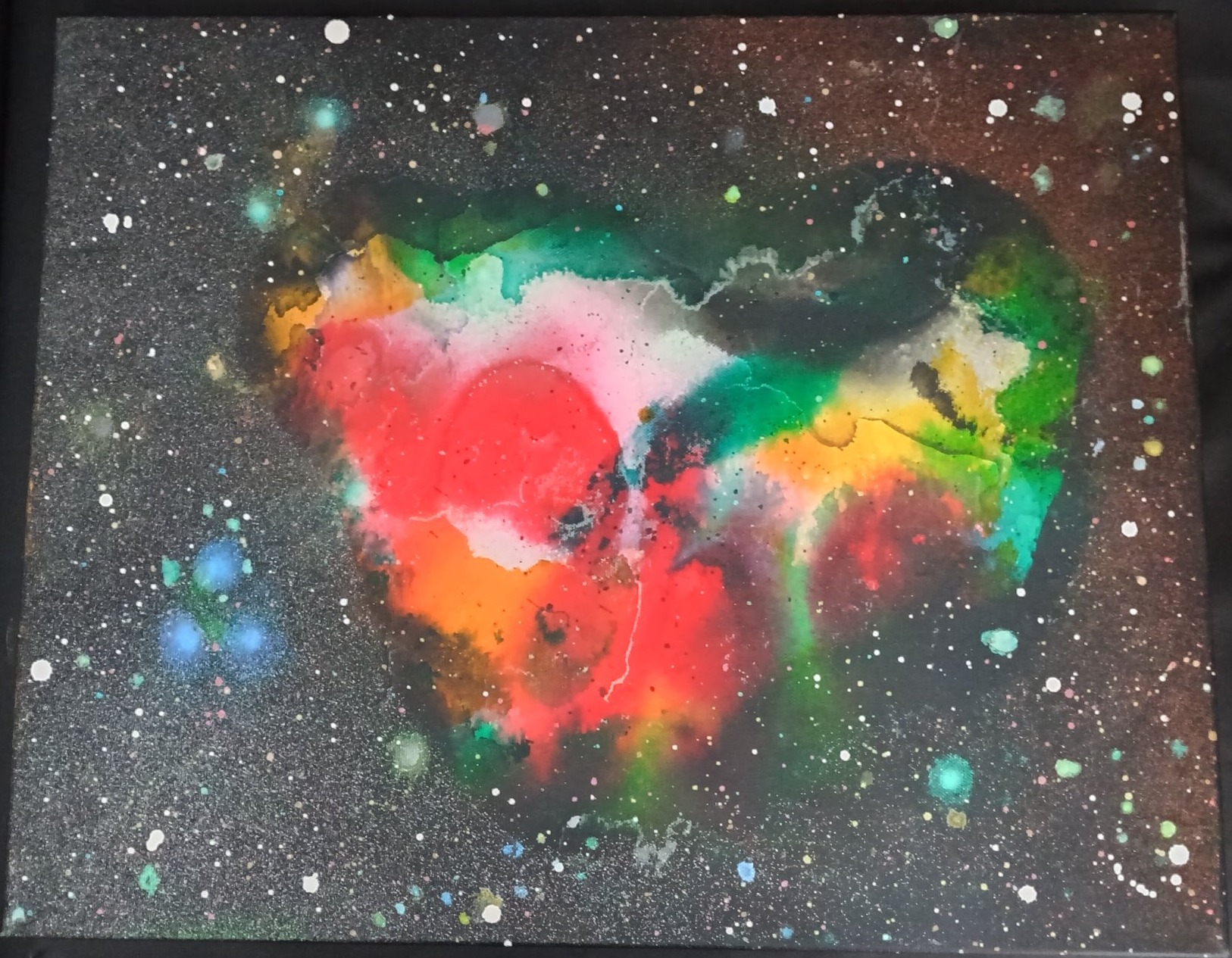
Stage 2 — the starfield. Posted as “Uni Galactic”.
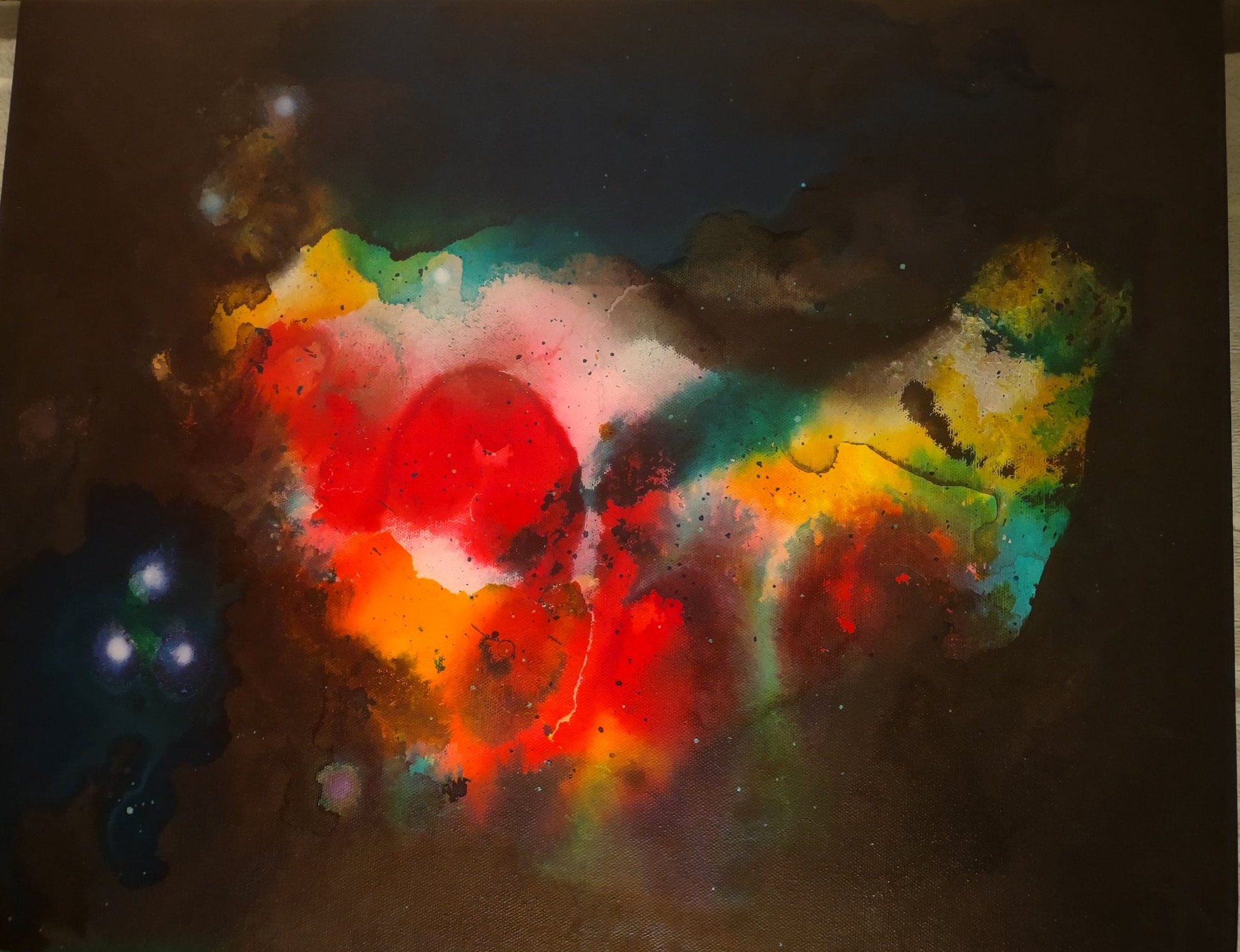
Stage 3 — the deep field; the cover is this stage. Posted as “Darkening”.
Art by Douglas John Brownfield. The plates are photographs of the work at each stage, cleaned of their surroundings and otherwise untouched.
About the author
Douglas J. Brownfield is an independent builder and artist based in America. He builds self-custodial software tools — programs designed so the people who use them keep hold of their own work — and he writes about what it is actually like to work with AI day after day: where it shines, where it guesses, and where it has to be watched.
His artwork — from book art to ink on canvas to graphic apparel design — takes its cues from whatever he's been looking at: deep space, riverboats, and more to come. One of them carries the art of his first book; a second, in four stages, carries the second.
His second book, Before Q-Day, grew out of his own preparation as a holder — a scheduled change to the mathematics his holdings depend on, researched the way he builds: from primary sources, with the unknowns stated plainly.